

Journal
Your website shouldn't feel like a second job
When updates, plugin conflicts and patches take over your evenings, your website has become a second job. Here's what changes when it doesn't.
It's late on a Sunday night, and Marta is still at the kitchen table.
She runs a small physical therapy practice. Years ago she built the website herself, and she was proud of it. These days, Sunday evenings belong to it: a list of updates waiting, a plugin asking for attention, a quick check that nothing broke.
Last month, something did. A plugin update quietly broke her booking form. She found out on Monday morning, from a patient who couldn't book.
If any of that sounds familiar, this post is for you.
How a website turns into a second job
Nobody sets out to take on a second job. It happens one small task at a time.
You launch the site, and it works. Then the notices start. A core update. A theme update. Three plugin updates, one of which doesn't play well with another. A security patch you should probably install today.
If your site runs on WordPress, you know the rhythm. You update, you check the pages that matter, you hope the contact form still sends. When you want something the theme wasn't built for, you look for a workaround, or another plugin, or someone to pay.
None of these tasks is hard on its own. Together, they never stop. And they always land on the same person: you.
What the upkeep is really costing you
The real cost isn't any single update. It's the attention.
It's the part of your mind that stays on the website when it should be on your patients, your customers or your evening. It's the low-level worry every time you click "update." It's the change you keep postponing because you're not sure what it will break.
For Marta, the cost was a Monday morning spent apologizing to a patient, and a Sunday-night habit she never signed up for.
You started a business to do the work you're good at. Looking after your website shouldn't take that time away from you.
A different model: one platform for building and running your site
Vysto starts from a different idea: one platform for building and running your website.
Six product agents run on every Vysto site.
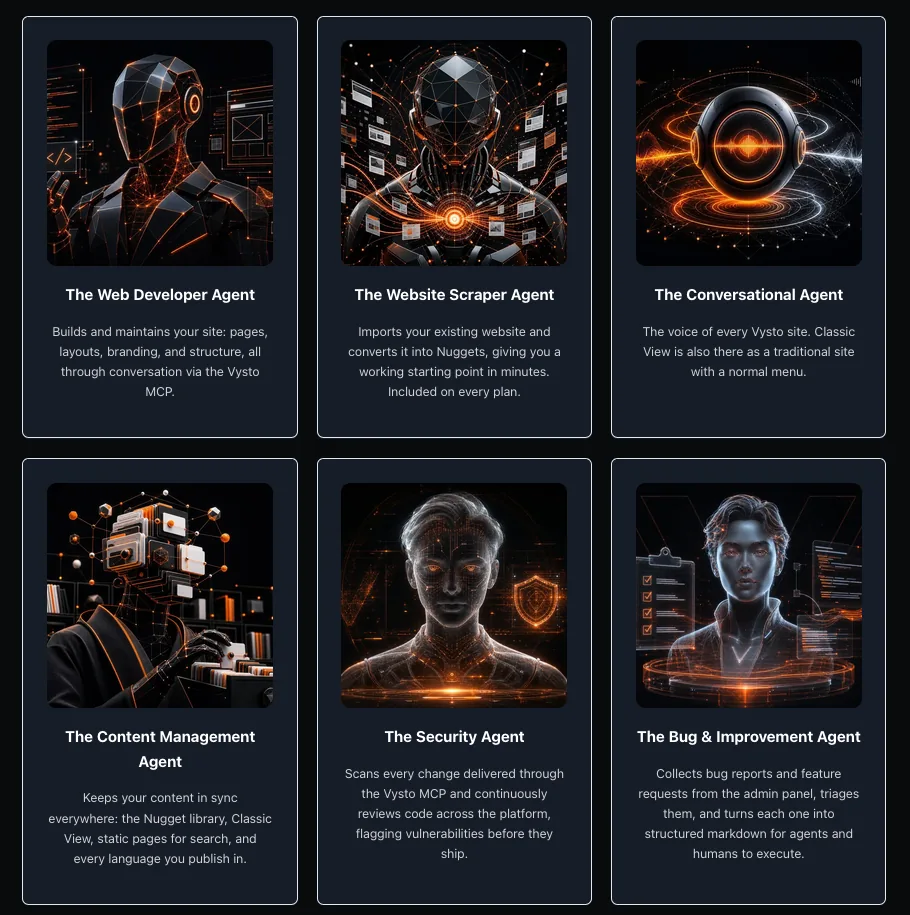
And when you want to change something, you don't hunt through settings. You can connect your AI to Vysto. Tell the AI you already use what to change, and Vysto makes it happen.
What Marta does now
Marta's site runs on Vysto now.
When she wants to change something, like new Saturday hours, a new service or a line on the home page, she asks her AI for the change. She reviews it. She publishes it.
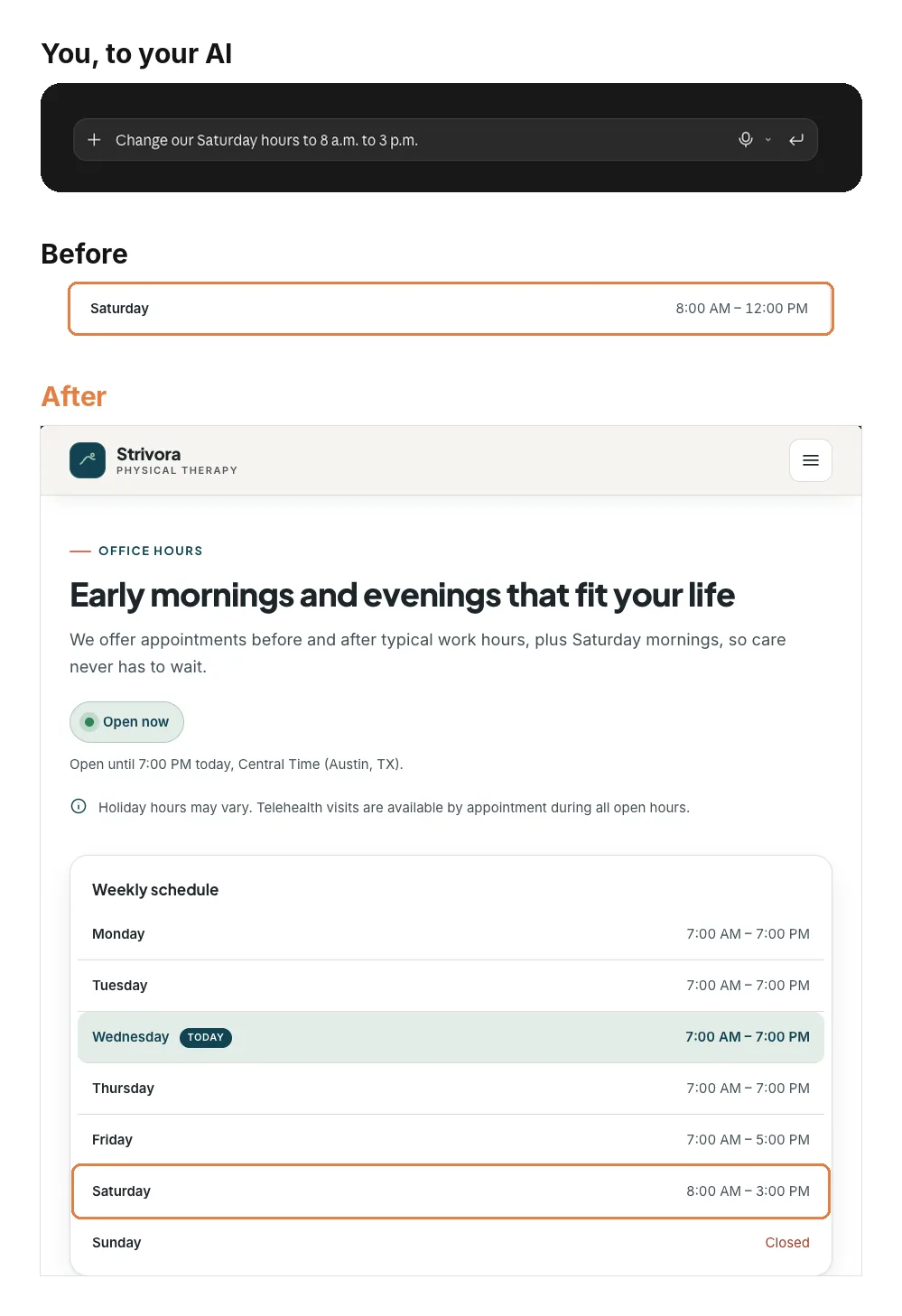
Her Sunday evenings are hers again.
Your Sunday evenings, back
The website still matters to Marta. It's how new patients find her and how they book. She just doesn't have to treat it like a second job anymore.
What would you do with your Sunday evenings back?
Join the waitlist. We have many sites live in private beta, with agency partners migrating their clients, public beta in January 2027, and a public release later that year.